At VIENNA FASHION WEEK.26, Gabriele Rigby showed with FRÖHLICH how processed textile waste can be transformed into new fashion.
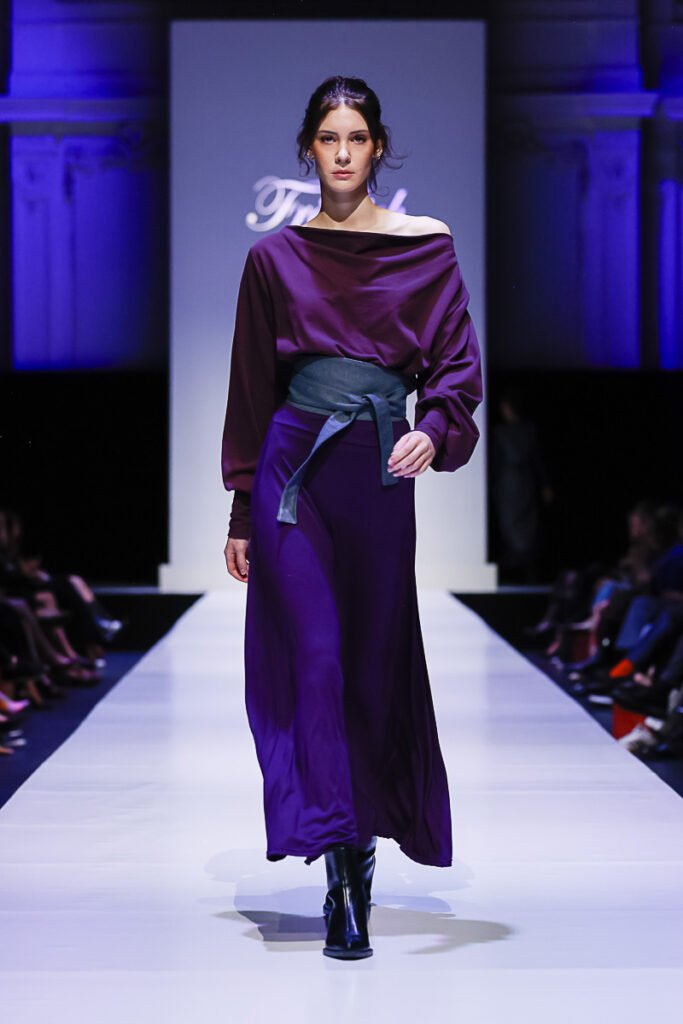
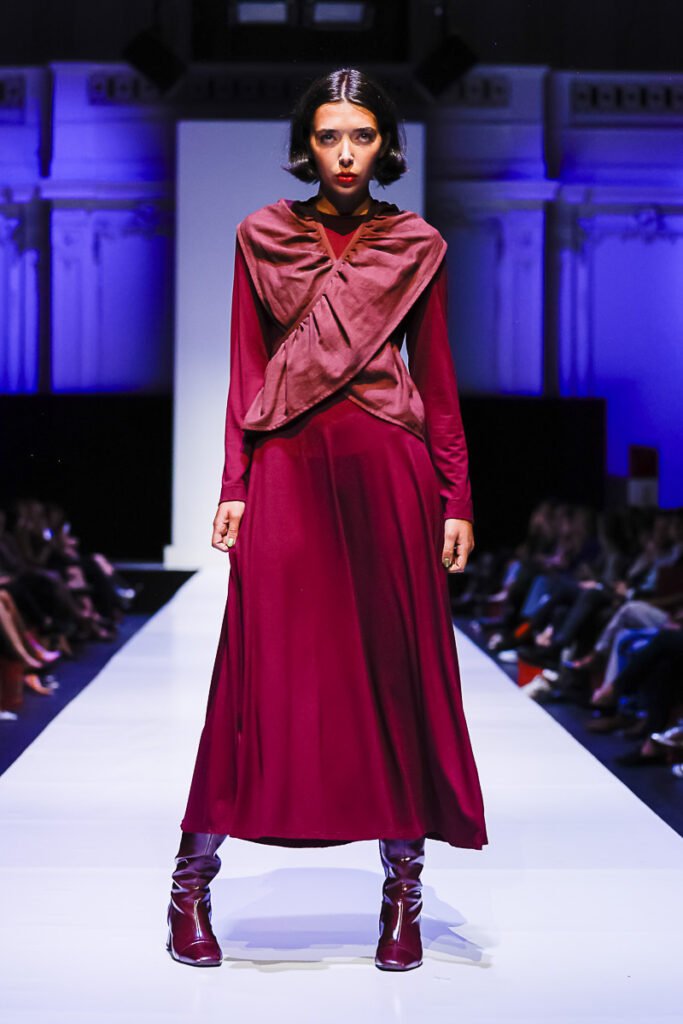
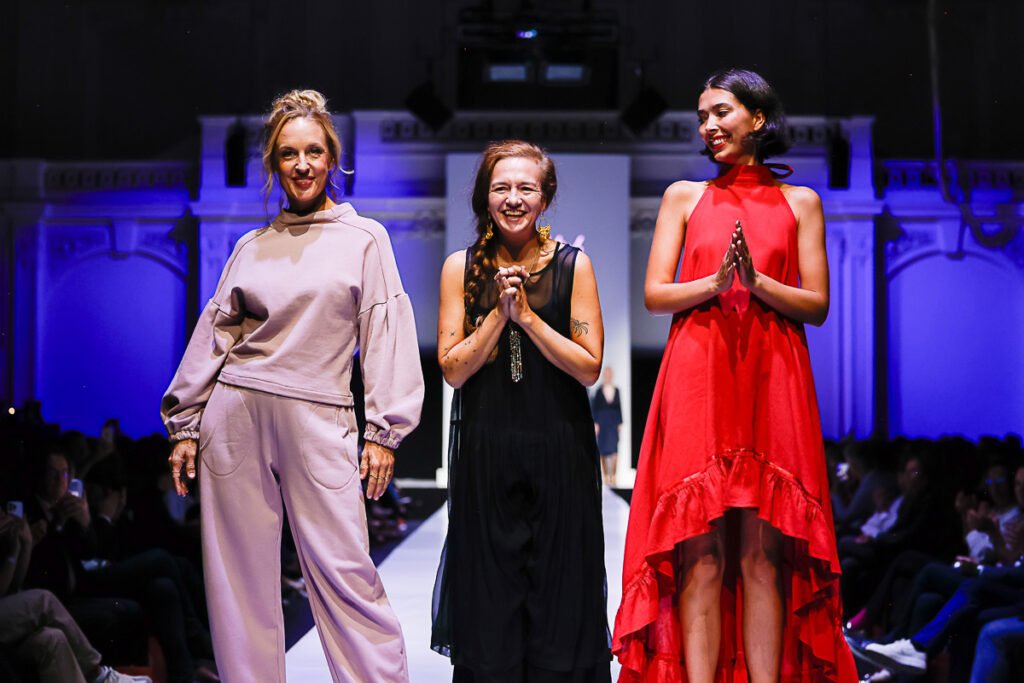
Violet, burgundy, red and blue met flowing fabrics, draping and unusual proportions. Gabriele Rigby presented around 40 looks with her label FRÖHLICH in Hall E of the MuseumsQuartier. What at first looked like a classic fashion show had another layer: the collection incorporated fibres processed from discarded textiles.
The evening was presented under the title “Saubermacher goes Fashion – Fashion Doesn’t End. It Begins Anew.” At its heart was a question that is becoming increasingly relevant to the fashion industry: What happens to clothing when it can no longer be worn?
From Textile Waste to New Materials
The answer begins long before the runway. Saubermacher collects textiles that can no longer be worn, sorts them and prepares them for further recycling processes. The aim is to return textile raw materials to the material cycle. The talk before the show explored this journey, from collection and recovery to fabric production and design.
The scale of the challenge is clear from the figures: in 2025, around 13.3 million tonnes of post-consumer textile waste were generated in Europe. Only a comparatively small share is currently recovered for textile-to-textile recycling. According to Textile Exchange, less than one per cent of fibres worldwide come from recycled pre- and post-consumer textiles.
The journey from a discarded garment back to new fabric is therefore still far from routine.
FRÖHLICH: Between Everyday Wear and Design
For Gabriele Rigby, working with materials is nothing new. Her Vienna-based label FRÖHLICH is known for timeless, comfortable womenswear, small production runs and craftsmanship. In the studio at Zieglergasse 68, she creates designs with fluid cuts, draping and adaptable shapes. Fabrics from European deadstock collections, as well as some vintage materials, have also been part of the label’s existing approach to materials.
The new collection fits surprisingly naturally into this design language.
On the runway, soft, fluid silhouettes took centre stage: long skirts and dresses, gathered tops, wrap details and voluminous sleeves. Strong colours were joined by occasional metallic accents. One dark blue look combined with material draped over the shoulders, while another played with a sculptural knitted collar. The collection remained wearable without losing its distinctive details. The recycled material did not become the subject of the clothing. It became part of its creation.
Recycling Doesn’t Have to Be Visible
That is precisely what makes the collaboration work. The collection does not look like a demonstration of recycling technology. It looks like FRÖHLICH.
And perhaps that is the more interesting perspective on sustainable fashion: the material does not have to announce that it is sustainable. What matters is what comes from it.
At the same time, the term sustainability deserves a closer look. Recycling alone does not automatically make a garment sustainable. Its lifespan, how it is used and whether its materials can be recovered again at the end of that life all matter, too.<br/>
A functioning textile cycle therefore does not begin with recycling alone. It needs collection, sorting, suitable technologies, new materials – and designers who can turn those materials into fashion people actually want to wear.
When the Circular Economy Reaches the Runway
Before the show, Nunu Kaller, Andreas Opelt of Saubermacher, Tércio Pinto of Impetus Group and Gabriele Rigby discussed these questions. The talk was moderated by Lilian Klebow. The conversation focused on the different stages of a textile cycle and what it takes to turn individual recycling solutions into systems that work in the long term.
That evening, the idea became tangible: materials whose original use had already come to an end became part of a new collection.
Suddenly, the focus was less on recycling and more on the classic question of fashion: What can this material become?
At FRÖHLICH, the answer was dresses, skirts, tops – and a collection that does not wear its origins on its sleeve.
Fashion doesn’t end. It begins anew.